The Strategic Power of Book Character Set Cartoon Vector Illustration in Modern Branding
In the rapidly evolving landscape of digital media and educational publishing, visual identity has become a cornerstone of engagement. Among the most versatile tools available to designers, educators, and marketers today is the Book Character Set Cartoon Vector Illust. This specific asset class goes beyond simple decoration; it represents a fundamental shift in how brands communicate complex ideas through accessible, scalable, and emotionally resonant imagery. As the market saturates with generic stock photography, the demand for unique, customizable character systems has surged, making this illustration style a critical component for professionals aiming to capture attention in crowded digital spaces.
Defining the Visual Language: What Is a Book Character Set?
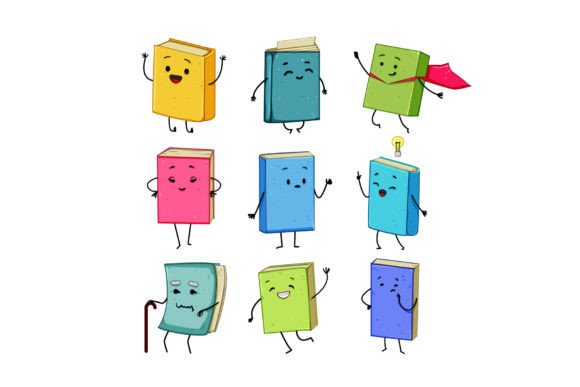
A Book Character Set Cartoon Vector Illust is not merely a single drawing but a comprehensive ecosystem of visual assets designed for consistency and adaptability. At its core, this collection features a cohesive group of characters—often depicted in a cute school or academic setting—that can be manipulated across various mediums without losing quality. Unlike raster images, which degrade when resized, vector illustrations are mathematically defined, ensuring that whether an image appears on a mobile app icon or a billboard, the lines remain crisp and the colors vibrant.
These sets typically include a wide array of expressions, poses, and accessories, allowing creators to tell dynamic stories. A standard set might feature a protagonist student, a teacher mascot, and supporting peers, all rendered in a consistent art style. The inclusion of elements like a face study allows for nuanced emotional expression, while mascot education book character sign components provide functional icons for navigation, warnings, or achievements within an application or physical book. When these elements are presented as an isolated symbol vector illustration, they offer maximum flexibility for layout designers who need to integrate graphics seamlessly into existing templates.
The Shift Toward Emotional Connection in Education and Business
Why are professionals paying such close attention to this specific illustration style? The answer lies in a broader consumer trend toward humanization and emotional connection. In the education sector, the traditional textbook model is being disrupted by interactive, gamified learning experiences. Children and young adults respond more positively to content that feels friendly and approachable rather than sterile and authoritative. A book character set cartoon serves as a bridge, transforming abstract concepts into relatable narratives.
Consider the workflow of an educational startup developing a new literacy app. Using a standardized character set ensures that the user interface remains consistent, reducing cognitive load for the learner. When a child sees the same mascot guiding them through a math problem and then celebrating their success, it builds a sense of continuity and trust. This psychological anchor is crucial for retention. Furthermore, the cute school aesthetic taps into a universal appreciation for warmth and safety, making it an effective tool for parents and educators evaluating new products.
Beyond education, this visual language is permeating corporate training and marketing materials. Companies are increasingly using mascot education book character sign elements to simplify complex internal processes or to make customer-facing communications less intimidating. The ability to convey information through a friendly face rather than dense text aligns with the modern preference for quick, digestible content consumption.
Scalability and Workflow Efficiency
For freelancers and creative agencies, the practical advantages of vector-based character sets are undeniable. The nature of vector illustration means that assets are infinitely scalable and easily editable. A designer can change a character's outfit, swap a facial expression from neutral to excited, or adjust the color palette to match a brand's new guidelines in minutes. This agility is essential in an industry where trends shift rapidly and client requirements often evolve mid-project.
The concept of an isolated symbol vector illustration further enhances workflow efficiency. Because each element is separated, designers can mix and match components to create entirely new scenes without redrawing from scratch. For instance, a marketer needing a social media campaign can take a character from the set, place them next to a promotional banner, and add a speech bubble—all within the same file structure. This modularity reduces production time and costs, allowing teams to iterate faster and test different visual approaches without significant resource investment.
Market Trends Driving the Demand for Custom Characters
The rise of the Book Character Set Cartoon Vector Illust is also a reflection of larger technological and cultural developments. As screen sizes vary from smartwatches to ultra-wide monitors, the need for resolution-independent graphics has never been higher. Vector files meet this technical requirement perfectly, ensuring that branding remains sharp across all devices. Additionally, the global push for inclusive representation in media has led to a demand for diverse character sets that reflect a wider range of backgrounds, abilities, and identities.
Creators are no longer satisfied with one-size-fits-all stock images. They seek bespoke solutions that align with their specific brand voice. A book character set cartoon allows for this level of customization. Entrepreneurs can commission sets that feature characters with specific cultural markers, clothing styles, or physical traits that resonate with their target demographic. This specificity helps brands stand out in a saturated market, fostering a deeper connection with their audience.
Furthermore, the integration of these characters into augmented reality (AR) and virtual reality (VR) environments is opening new frontiers. Because vector data is lightweight and structured, it is easier to animate and integrate into 3D models compared to flat raster images. This forward-looking capability ensures that investments in high-quality character sets today will remain relevant as immersive technologies become more mainstream.
Practical Applications Across Industries
The versatility of these illustrations extends well beyond children's books. Here are several practical examples of how professionals are leveraging this asset class:
- E-Learning Platforms: Using face study variations to demonstrate different emotional states during interactive lessons, helping students develop empathy and social skills alongside academic knowledge.
- Corporate Onboarding: Deploying a mascot education book character sign series to guide new employees through company policies, turning dry compliance documents into engaging storylines.
- Digital Marketing Campaigns: Utilizing isolated symbol vector illustration assets to create consistent social media graphics that maintain brand recognition across Instagram, LinkedIn, and TikTok.
- App Development: Implementing a full Book Character Set Cartoon Vector Illust to serve as the primary UI/UX guide, providing intuitive feedback and navigation cues for users.
Future-Proofing Creative Assets
As we look toward the future of design and communication, the importance of owning a robust library of custom vector characters cannot be overstated. The ability to adapt quickly to changing trends, update visuals for rebranding efforts, and scale assets for emerging platforms makes the Book Character Set Cartoon Vector Illust a strategic investment rather than just a creative expense.
Professionals who embrace this approach are positioning themselves at the forefront of a visual revolution. By prioritizing clarity, scalability, and emotional resonance, they are creating content that not only looks good but performs effectively. Whether you are an entrepreneur launching a new product, a marketer crafting a campaign, or an educator designing a curriculum, integrating a well-crafted book character set cartoon into your toolkit offers a competitive edge that generic imagery simply cannot match.
Ultimately, the value of these illustrations lies in their ability to tell a story. In a world where attention is the scarcest resource, the characters that speak directly to our emotions and needs are the ones that will endure. By investing in high-quality, flexible, and meaningful visual systems, creators are ensuring that their message is not just seen, but remembered.