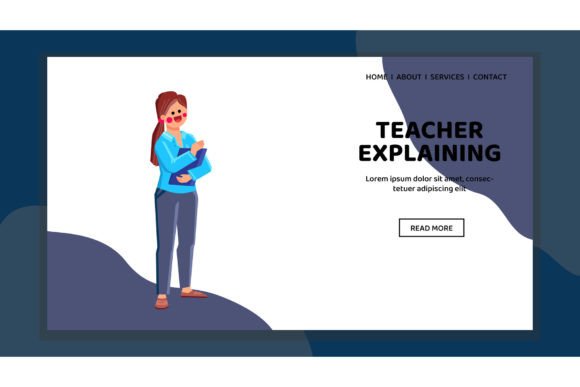
The Rise of Tiny Teachers with Educational Tools in Modern Visual Communication
In the rapidly evolving landscape of digital content creation, the demand for assets that balance professionalism with approachability has never been higher. Among the most compelling trends to emerge in recent years is the concept of Tiny Teachers with Educational Tools. This visual motif, often realized through isolated flat vector illustrations, has transcended its origins as simple clip art to become a cornerstone of contemporary educational branding. These cartoon depictions of educators from diverse disciplines—ranging from geography and mathematics to physical culture—are not merely decorative; they serve as powerful communicative tools that bridge the gap between complex academic concepts and accessible user experiences.
For professionals, creators, and entrepreneurs operating within the education technology (EdTech) sector, understanding the nuance of these assets is critical. They represent a shift in how we visualize learning, moving away from sterile stock photography toward stylized, scalable, and emotionally resonant imagery. As workflows change and expectations for digital engagement rise, the integration of Tiny teachers with educational tools and stationery isolated flat vector illustration has become a strategic imperative for those aiming to capture attention in a crowded marketplace.
Defining the Visual Identity of Modern Education
What exactly constitutes Tiny Teachers with Educational Tools? At its core, this refers to a specific genre of graphic design where miniature, stylized characters representing educators are depicted interacting with their subject-specific instruments. Unlike realistic portraits, these figures are rendered in a flat vector style, characterized by clean lines, solid colors, and a lack of gradients or shadows. This aesthetic choice ensures that the images remain crisp at any resolution, making them ideal for everything from mobile app icons to large-scale presentation slides.
The "tiny" aspect of these characters serves a psychological purpose. By reducing the scale of the teacher figure, designers create a sense of playfulness and approachability. It lowers the barrier to entry for learners, particularly younger audiences, who might otherwise feel intimidated by traditional academic imagery. When you see a cartoon teacher of different disciplines, such as a math instructor holding a giant abacus or a geography teacher standing next to a globe, the image instantly communicates the subject matter without the need for text. This visual shorthand is invaluable in an era where users scan content rapidly and make split-second decisions about relevance.
Diversity in Discipline: From Math to Physical Culture
The versatility of this asset class lies in its ability to cover the entire spectrum of the curriculum. The trend is not limited to generic classroom settings but extends to specialized fields. Consider the representation of mathematics; instead of a blackboard filled with equations, a tiny teacher might be shown manipulating geometric shapes or balancing scales, symbolizing logic and problem-solving in a tangible way. Similarly, in physical culture or sports education, the illustration shifts focus to movement and health, perhaps depicting a coach with a whistle and a stopwatch, emphasizing activity over theory.
- Geography: Characters are often paired with maps, compasses, and globes, turning abstract locations into explorable territories.
- Mathematics: Tools like rulers, protractors, and calculators are exaggerated in size relative to the character to highlight precision and calculation.
- Physical Culture: Equipment such as balls, jump ropes, and cones are used to convey energy and teamwork.
This specificity allows marketers and content creators to tailor their messaging precisely. A platform offering STEM courses can utilize the math-focused vectors, while a wellness app for schools can leverage the physical culture variations. The isolation of these elements on a transparent background further enhances their utility, allowing designers to layer them over various textures, colors, and layouts without clashing.
Aligning with Broader Industry and Consumer Trends
The surge in popularity of Tiny Teachers with Educational Tools does not exist in a vacuum. It is deeply intertwined with broader shifts in the creative industry and consumer behavior. One of the most significant drivers is the "flat design" revolution. For over a decade, the tech world has moved away from skeuomorphism—the imitation of real-world objects—toward minimalism. Users now prefer interfaces that are clean, intuitive, and fast-loading. Vector illustrations fit this paradigm perfectly, offering high visual impact with low file sizes, which is crucial for web performance and SEO.
Furthermore, there is a growing cultural emphasis on inclusivity and diversity in education. Traditional stock photos often struggle to represent the true demographic reality of classrooms globally. In contrast, custom vector illustrations offer complete control over representation. Creators can adjust skin tones, clothing styles, and accessories to reflect a truly global audience. This flexibility makes Tiny teachers with educational tools and stationery isolated flat vector illustration a preferred choice for international EdTech companies seeking to build trust with diverse user bases.
Another key trend is the gamification of learning. As educational platforms strive to increase engagement, they adopt game-like mechanics and aesthetics. The cartoonish nature of these tiny teachers aligns seamlessly with this approach. They evoke the same emotional response as video game avatars, encouraging interaction and reducing the perceived difficulty of the material. When a student sees a friendly, animated character guiding them through a lesson, the experience feels less like work and more like an adventure.
Why Professionals Are Paying Attention
Freelancers, entrepreneurs, and marketing teams are increasingly prioritizing these assets because they solve multiple problems simultaneously. First, they address the issue of copyright and licensing. High-quality, original vector sets eliminate the risk of using copyrighted photographs and provide a unique brand identity that competitors cannot easily replicate. Second, they streamline the production workflow. Because these illustrations are modular, a single set of assets can be reused across websites, social media campaigns, e-books, and printed materials without losing quality.
Consider the workflow of a freelance designer creating a landing page for a new online tutoring service. Instead of spending hours searching for the perfect photograph of a teacher, they can pull from a library of Tiny Teachers with Educational Tools. They can swap out the background, change the color palette to match the client's brand guidelines, and even combine elements—such as placing a geography teacher next to a math teacher—to illustrate interdisciplinary learning. This efficiency translates directly to cost savings and faster time-to-market, which are critical metrics for startups and agile businesses.
Changing Expectations in Digital Learning
The expectations of modern learners have shifted dramatically. Today's students, accustomed to high-quality animation and interactive media, find static, text-heavy content unengaging. They expect visuals that are dynamic and expressive. The use of cartoon teachers of different disciplines meets this expectation by adding a layer of personality to the educational experience. These characters act as guides, mentors, and companions, fostering a sense of connection that text alone cannot achieve.
Moreover, the rise of remote learning has necessitated a reimagining of the classroom environment. Without the physical presence of a teacher, digital avatars fill the void. They provide a focal point for attention and help maintain the structure of a lesson. In this context, the Tiny Teachers with Educational Tools concept becomes more than just a design trend; it becomes a functional necessity for maintaining engagement in virtual spaces.
Practical Applications and Strategic Implementation
To leverage these assets effectively, creators must think beyond simple decoration. The placement and context of these illustrations should reinforce the message of the content. For instance, in a blog post discussing the importance of outdoor education, an image of a physical culture teacher with a whistle and a ball can serve as a visual anchor, immediately signaling the topic to the reader. In a technical whitepaper about curriculum development, a smaller, more subtle version of a math teacher with a ruler can break up dense text and provide visual relief.
- Brand Consistency: Use a consistent style of Tiny Teachers with Educational Tools across all touchpoints to build brand recognition.
- Emotional Connection: Select characters that express emotions relevant to the content, such as curiosity, excitement, or determination.
- Cultural Relevance: Customize the attire and tools of the characters to resonate with specific cultural contexts or regional curricula.
Marketers should also consider the scalability of these designs. A vector illustration created for a mobile app icon can be scaled up for a billboard or down for a favicon without pixelation. This adaptability ensures that the investment in high-quality assets yields long-term returns. Additionally, the isolated nature of these graphics allows for easy integration into motion graphics. Animating a tiny teacher waving or pointing to a tool can bring static content to life, further enhancing user engagement.
Looking Forward: The Future of Educational Illustration
As technology continues to advance, the role of Tiny Teachers with Educational Tools will likely expand. We may see these static vectors evolve into interactive 3D models or AI-driven avatars that can respond to user input in real-time. However, the fundamental principles of clarity, approachability, and discipline-specific symbolism will remain constant. The need to communicate complex ideas simply will always require a strong visual language, and these stylized characters are poised to lead that charge.
For professionals looking to stay ahead of the curve, embracing this aesthetic is not just about following a trend; it is about adopting a philosophy of inclusive, engaging, and efficient communication. Whether you are building a startup, managing a marketing campaign, or designing a curriculum, the strategic use of Tiny teachers with educational tools and stationery isolated flat vector illustration offers a proven path to connecting with your audience on a deeper level.
In conclusion, the evolution of educational imagery reflects a broader desire for human-centric design in the digital age. By utilizing these vibrant, versatile, and meaningful illustrations, creators can transform the way people perceive and interact with learning. The Tiny Teachers with Educational Tools are more than just pictures; they are the ambassadors of a new era in education, one where every learner feels seen, understood, and inspired.