Welcome to Educational Vertical Flyer: A Template Evaluation
In the realm of educational marketing and institutional communication, visual assets play a critical role in conveying information effectively. The Welcome to Educational Vertical Flyer is a digital design resource intended for professionals, educators, and administrators who require a structured layout for promoting seminars, online lessons, or training programs. This article provides an objective analysis of this specific template, examining its technical specifications, design utility, and suitability for various educational contexts.
Understanding the Design Resource
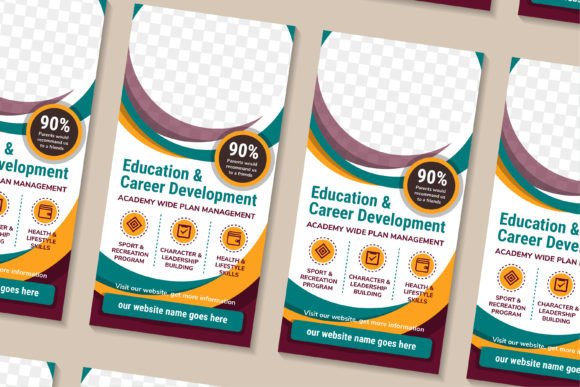
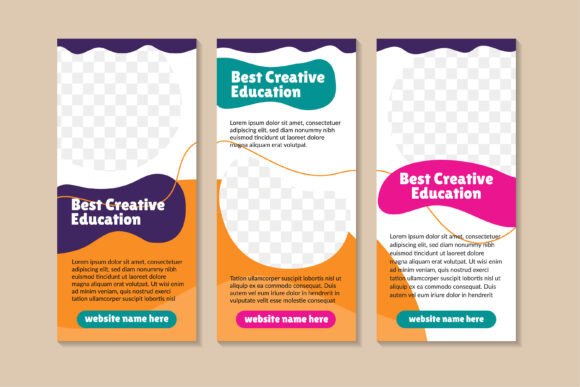
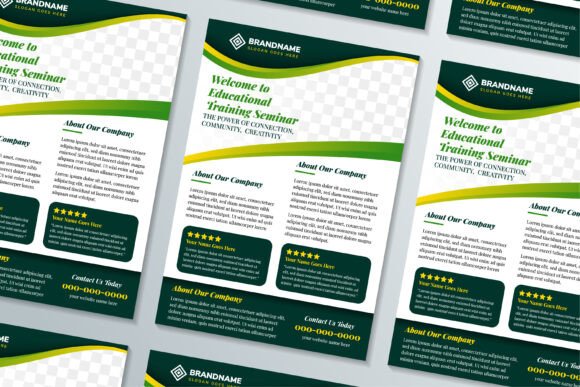
The Welcome to Educational Vertical Flyer is a vector-based graphic template designed with a vertical orientation. It serves as a foundational layout for creating promotional materials such as posters, flyers, and digital advertisements. The design features a multicolor green gradient element, which often symbolizes growth, stability, and learning within an educational context. A defining characteristic of this template is the dedicated space for a photograph, allowing users to integrate specific imagery relevant to their event, course, or institution.
Technically, the file is delivered in high resolution at 300dpi, ensuring print readiness for physical distribution. Furthermore, all graphics are constructed using 100% vector data. This means that elements can be scaled infinitely without loss of quality, a crucial feature for adapting a single design to various formats ranging from small business cards to large-format banners. The package typically includes multiple file formats, such as AI (Adobe Illustrator), EPS, JPG, and SVG, providing flexibility across different software environments.
Reasons for Interest in This Template
Professionals may consider the Welcome to Educational Vertical Flyer for several practical reasons. First, the pre-organized structure significantly reduces the time required to create professional-grade marketing materials. For school administrators, university departments, or private tutors, the ability to quickly customize text, shapes, and colors allows for rapid deployment of announcements regarding upcoming classes, conferences, or community events.
The inclusion of editable text and color options addresses the need for brand consistency. Institutions often have strict guidelines regarding logos and color palettes. Since this template allows for easy modification of these elements, it ensures that the final output aligns with existing branding standards while maintaining a modern aesthetic. Additionally, the "wave" and gradient concepts incorporated into the design offer a contemporary look that can help educational institutions appear more dynamic and accessible to prospective students.
Benefits and Technical Advantages
The primary benefit of utilizing a vector-based template like the Welcome to Educational Vertical Flyer lies in its versatility. Because the graphics are not pixel-based, designers can manipulate individual components without degrading image quality. This is particularly advantageous when creating a suite of materials, such as a catalog, booklet, or a series of social media posts derived from the same master layout.
Key advantages include:
- Scalability: The 100% vector nature ensures crisp lines and sharp text regardless of the output size.
- Customization: Editable text layers allow for immediate updates to dates, times, and descriptions without needing to redraw elements.
- Format Flexibility: The inclusion of AI, EPS, JPG, and SVG files supports workflows involving both professional design software and web-based tools.
- Print Readiness: The 300dpi resolution meets standard requirements for high-quality offset and digital printing.
Tradeoffs and Considerations
While the template offers significant efficiency, there are tradeoffs to consider. The reliance on a pre-designed structure means that the overall aesthetic is somewhat fixed. While colors and text can be changed, the fundamental layout and the specific style of the green gradient wave are inherent to the design. Organizations seeking a completely unique or avant-garde visual identity may find the template too generic or restrictive.
Furthermore, effective use of this resource requires access to compatible software. To fully leverage the editable vector capabilities, users typically need Adobe Illustrator or similar vector editing applications. Users relying solely on basic image editors may only be able to utilize the JPG version, which limits their ability to edit text or shapes and restricts scalability.
Situations Where the Template is a Strong Fit
The Welcome to Educational Vertical Flyer is particularly well-suited for specific scenarios within the education sector. It is an ideal choice for:
- Training Seminars and Workshops: The vertical layout with photo space works effectively for highlighting guest speakers or key topics.
- Online Course Promotions: The modern, clean design appeals to adult learners and professionals seeking continuing education.
- University Department Announcements: Departments can use the template for annual catalogs, class schedules, or faculty introductions.
- Community Education Programs: Local organizations can adapt the design for tutoring services, study groups, or public lectures.
In these situations, the balance between professional appearance and ease of customization makes the template a practical tool for efficient communication.
When Alternatives May Be Worth Considering
Despite its strengths, the Welcome to Educational Vertical Flyer may not be the optimal solution for every project. Alternatives should be considered if:
- Brand Guidelines Are Strict: If an institution has very specific typography or layout rules that do not align with the template's structure, a custom design might be necessary.
- Horizontal Layouts Are Required: As the name suggests, this is a vertical flyer. Projects requiring landscape orientations, such as certain website banners or letterhead designs, would require a different asset.
- Budget Allows for Custom Illustration: If the goal is to create a highly distinctive visual campaign that stands out through unique illustration rather than standard vector shapes, hiring a designer for a bespoke creation may yield better results.
- No Access to Vector Software: If the user lacks the necessary software to edit AI or EPS files, they may be limited to static images, reducing the value of the purchase.
Practical Decision-Making Insights
When deciding whether to adopt the Welcome to Educational Vertical Flyer, potential users should evaluate their specific workflow and design capabilities. Begin by assessing the software available in your organization. If you have access to vector editing tools, the full potential of the template can be realized. Next, review your branding requirements. Determine if the green gradient and wave motif can be adapted to fit your color palette or if they conflict with your established identity.
Consider the volume of materials needed. If you require a one-off poster, the time saved by using a template is substantial. However, if you are launching a complex, multi-channel campaign requiring diverse layouts, investing in a broader design system or custom work might be more cost-effective in the long run. Finally, verify the file formats included in your download. Ensuring you receive the necessary source files (AI, EPS) is essential for future edits and scalability.
Conclusion
The Welcome to Educational Vertical Flyer represents a functional and efficient solution for creating educational marketing materials. Its combination of high-resolution vector graphics, editable elements, and a modern aesthetic makes it a valuable asset for schools, universities, and training providers. By understanding its technical strengths and limitations, users can make informed decisions about whether this template aligns with their specific communication goals and design resources. For those seeking a balance between professional quality and ease of use, this vertical layout offers a reliable foundation for promoting knowledge, courses, and community engagement.