Happy Children Making Robot for School P
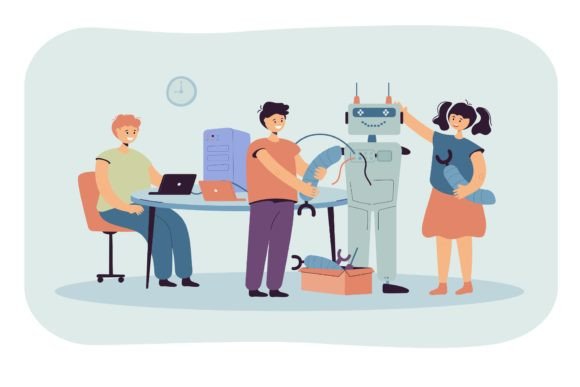
In the rapidly evolving landscape of modern education, visual storytelling plays a crucial role in communicating complex ideas simply and effectively. The concept represented by Happy Children Making Robot for School P captures more than just a scene; it encapsulates the spirit of innovation, collaboration, and the joy of learning. This specific imagery, often found as a flat vector illustration, depicts cartoon students actively engaged in building robots under the guidance of a teacher. It serves as a powerful symbol for engineering technology and the integration of robotics into school curriculums.
For educators, parents, and content creators, understanding the value of this visual narrative is essential. It is not merely a decorative element but a strategic tool used to inspire interest in STEM (Science, Technology, Engineering, and Mathematics) fields. When you encounter an image of happy children making robot for school project flat vector illustration, you are looking at a representation of hands-on learning where theoretical knowledge meets practical application.
The Core Value of Robotics in Education
At its heart, the theme of students learning robotics addresses a fundamental shift in how we prepare the next generation for the workforce. Traditional rote memorization is being supplemented—and often replaced—by active problem-solving. The Happy Children Making Robot for School P concept highlights this transition. It shows young minds working together, troubleshooting code, assembling circuits, and seeing their creations come to life.
This approach fosters critical skills that go beyond the classroom. Students learn resilience when a robot fails to move, creativity when designing a new function, and teamwork when coordinating roles within a group. The presence of a teacher in these illustrations emphasizes the importance of mentorship. It suggests that while technology drives the process, human guidance ensures safety, direction, and ethical understanding. For adults observing this trend, whether as parents or investors, recognizing these dynamics helps in supporting educational initiatives that truly matter.
Why Visuals Matter in Promoting STEM
Visual communication is often the first point of contact between an idea and an audience. A high-quality cartoon students learning robotics with teacher illustration can instantly convey the atmosphere of a modern science lab without a single word of text. Flat vector art, in particular, offers clarity and scalability, making it ideal for various digital and print mediums.
When marketers or educators use these images, they tap into positive emotions. The "happy" aspect of the children in the illustration is deliberate. It counters the stereotype that engineering is difficult, boring, or exclusively for geniuses. Instead, it presents robotics as an accessible, fun, and collaborative activity. This emotional connection is vital for encouraging enrollment in coding camps, selling educational kits, or promoting school programs focused on engineering technology.
Practical Applications Across Industries
The utility of the Happy Children Making Robot for School Project theme extends far beyond simple decoration. It serves diverse needs across multiple sectors, from non-profit organizations to commercial enterprises.
- Educational Institutions: Schools and universities use these visuals on brochures, websites, and social media to showcase their commitment to modernizing curricula. An image of students building robots signals to prospective parents that the institution is forward-thinking and equipped with the latest tools.
- Tech Startups and EdTech: Companies developing educational software or hardware kits leverage this imagery to demonstrate the end-user experience. Showing happy children interacting with their products builds trust and illustrates the intended outcome of using the technology.
- Content Creators and Bloggers: Writers focusing on parenting, education, or future trends need engaging headers and featured images. A flat vector illustration of a robotics class provides a clean, professional look that aligns with articles discussing the future of work or child development.
- Corporate Training and CSR: Large corporations often run community outreach programs focused on youth education. Using consistent branding that includes themes of engineering technology and education helps unify their message of investing in the future workforce.
Designing for Engagement: The Role of Flat Vector Art
The choice of flat vector illustration is significant in today's design landscape. Unlike photorealistic images, which can sometimes feel staged or heavy, flat vectors offer a timeless, friendly aesthetic. They strip away unnecessary details, focusing the viewer's attention on the action: the collaboration between the teacher and students, the assembly of the robot, and the expressions of joy.
For designers and small business owners, this style is also practical. Vectors can be resized infinitely without losing quality, making them perfect for everything from a tiny favicon on a website to a massive banner at a tech conference. The bright, distinct colors typical of these illustrations ensure they stand out on crowded social media feeds, grabbing the attention of busy adults scrolling through their devices.
Key Considerations for Implementation
While the appeal of Happy Children Making Robot for School P is clear, selecting and using such imagery requires thoughtful consideration. To maintain authenticity and effectiveness, creators should keep several factors in mind.
Authenticity and Representation: It is important that the illustrations reflect diversity. The "children" in the image should represent a wide range of backgrounds, genders, and abilities. This inclusivity reinforces the message that engineering is for everyone. If an image feels tokenized or stereotypical, it can undermine the positive message of the educational concept.
Contextual Relevance: Ensure the visual matches the surrounding content. If an article discusses advanced AI ethics, a simplistic cartoon might feel too juvenile. Conversely, if the topic is introducing basic coding to elementary students, a highly technical diagram might be intimidating. The cartoon students learning robotics with teacher style works best when the goal is to inspire, introduce, or celebrate the joy of discovery.
Quality and Licensing: For professionals using these assets commercially, verifying the license is crucial. High-quality vector files should be crisp, well-organized, and free of pixelation. Using low-resolution or unlicensed stock imagery can damage a brand's reputation and lead to legal issues. Investing in premium assets or creating custom illustrations ensures that the final product looks polished and professional.
Bridging the Gap Between Concept and Reality
Ultimately, the power of the Happy Children Making Robot for School P concept lies in its ability to bridge the gap between abstract educational goals and tangible reality. It transforms the idea of "learning robotics" from a daunting academic requirement into an exciting adventure. For parents, it offers a glimpse into the skills their children are acquiring. For educators, it provides a visual shorthand for their pedagogical philosophy. And for businesses, it represents a market ripe with potential for growth and innovation.
As technology continues to reshape our world, the need for clear, inspiring, and accurate communication has never been greater. By embracing visuals that celebrate the intersection of engineering technology and education, we help cultivate a culture where curiosity is rewarded, and every child feels empowered to build the future.